Two masters: visual artist, curator, and writer Félix Ángel (Medellín, 1949); and writer, painter, designer, publicist, and editor Saúl Álvarez Lara (Bogotá, 1948); tell us about the first all-star team, the first soccer team of migrants, that scores goals through the paintings of one of Antioquia’s most important living artists, now based in the United States. Art and non-violence, like that experienced this week at the Atanasio Girardot Stadium (Medellín, Colombia).

Moving around has been part of man’s behavior since its origins. As animals, it is an action motivated sometimes by the instinct of survival, and others, as intelligent beings, by reason.
In recent years, the social circumstances and the economic-political problems that various human groups face in their respective societies have produced idiosyncratic changes and questioning of the supposed freedom that man has to decide for his destiny. This has generated ideological, racial, religious and many other distortions that have placed migration at the forefront of the conflicts that certain countries, especially the economically advanced, look with suspicion because they consider it as a danger to the stability of power groups (even if they do not necessarily represent the majority), the homogeneity of their cultures and norms of life.
Industrialized countries are magnets for immigration.
Being an immigrant, the subject occupies special interest in my way of looking at the world and those who cohabit and manage it.
At the end of 2024, I started working on an art project around the theme of migration. The agent I chose was soccer—a theme that has been familiar in my work for many years, creating a fictional team inspired by the immigrants I frequently see in the City of Washington where I live, playing in the spaces generously designated for sports activities in neighborhoods with a high index of immigrant population.
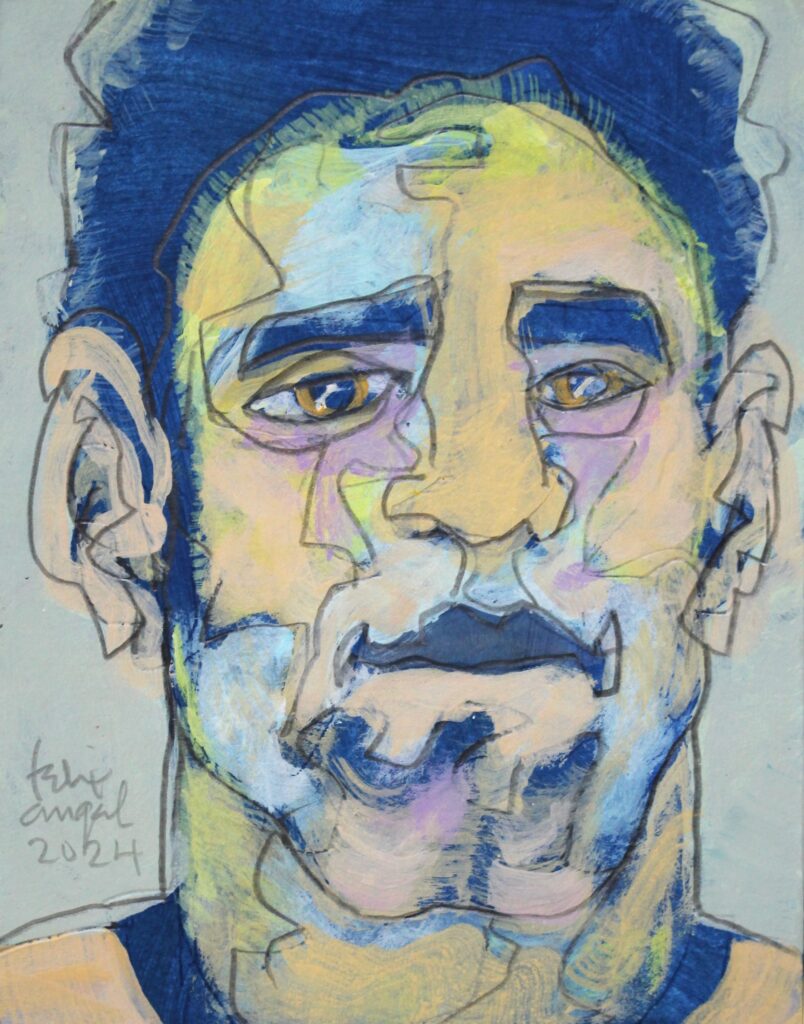
Most migrants are hard-working people, who fight for a better future amid the disadvantages they suffer while complying with the processes of legalization, adaptation, cultural assimilation and language, which in many aspects are difficult and inconsistent.
In many neighborhoods of large cities, soccer teams are formed and organized by immigrants whose only common characteristic is that of being newcomers. Soccer, which has become a universal sport, is a physical, playful way of using the scarce free time outside of working and attending to domestic matters, neutralizing the effect of bad experiences due to ignorance of the social order, long hours, low incomes, and the demands of contemporary life, expanding the circle of friends who, initially in a foreign country, serves as moral support and humanitarian provision to meet and live with other migrants who, no matter where they come from, share the condition of being strangers.
The game of football -or soccer as it is referred in English, is therefore transformed into an eloquent metaphor. That is the concept of the work I have been working on in recent months, which alludes to how a human group turned undesirable, in most cases sets an example of functionality in a society that increasingly loses the values of civilization and makes less effort to get ahead because of the ambition of easy money and race superiority presumption.
As I have the habit of sharing with friends the process of my various artistic endeavors, as I progressed I made some of them participate in the results of the project, which is more complex in its discourse, but I simplify here for practical reasons because, it is actually the images that are in charge of explaining my motivation and channeling what is inherently sensitive to the proposal, and their possible evocations.
I was very pleased and surprised by the reaction of the writer Saul Álvarez Lara. His answer is ascribed to the text that follows which, according to the writer , “tries to portray the feeling that we all, at some point, live and football is the line because of its proximity, whether we are fans or not. The text [attached] was inspired by the neighborhood migrant soccer team. What was written there is what caused me to receive them, see them and get to know them a little more. I appreciate you sharing it.”
The football we play
Saúl Álvarez Lara (Bogotá, 1948) | Writer, painter, designer, publicist, editor | Winner of the 5th Medellín Chamber of Commerce Contest with the short story collection “Recuentos” (2001) | Co-author with Humberto Pérez of “El Teatro Leve” (short stories, co-published by the newspaper Vivir en El Poblado and the University of Antioquia Press, 2002) | Author of “El sótano del cielo” (short stories, EAFIT University Press, 2003). “La silla del otro,” a novel, was published by the Pontifical Bolivarian University Press in 2005 | Winner of the 3rd Medellín Mayor’s Office Cultural Projects Call in 2005 with the novel “¡Otra vez!”. He has published articles and short stories in academic and cultural journals in Colombia. Author and editor of “Ficción – La Página.” Special for Papel Magazine.
I remember when I played soccer with friends in the neighborhood. We didn’t play in teams of eleven against eleven, no, there were two or three, against two or three, and we didn’t call the game football, we called it “benches”, why?, I don’t know, it was with that title that we knew the game in the block, in the neighborhood, in the school, everywhere. The ball, in many cases made of rag, did not bounce too much, it was not advisable because of the glass of the windows around it or because in any jump it went over the wall to the nearby lot and entering to look for it was a hassle.
As we grew up, soccer also became bigger, we played against teams from other neighborhoods, from other blocks or from the same one, on a public field, a sandpit, with regulation goals, but without a net, so that any goal forced the defeated goalkeeper to go for the ball to the neighboring lot. I played for years in a team that we called “Juventus” in honor of the Italian team and our uniform was white, only white shirts, the easiest to get in every house. We were young, we ran like crazy, the defenders were also strikers, and the goalkeeper came out of the strikers on many occasions; the important thing was to play and, sometimes, we played up to two or three games a day, if we had enough people to do so.
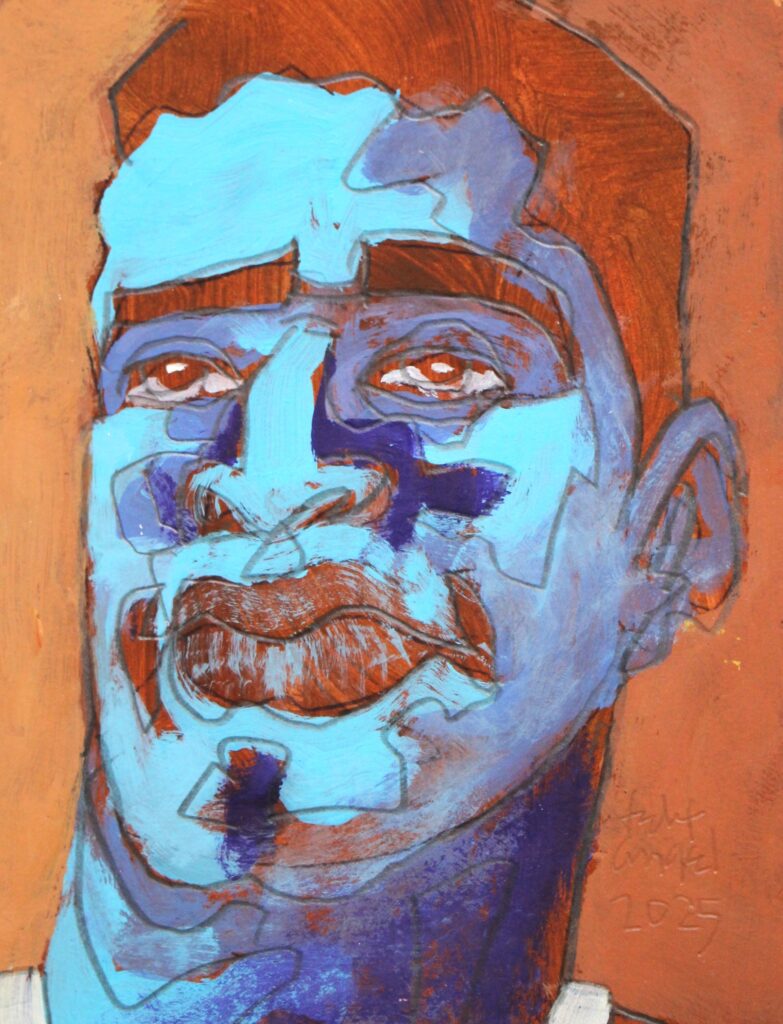
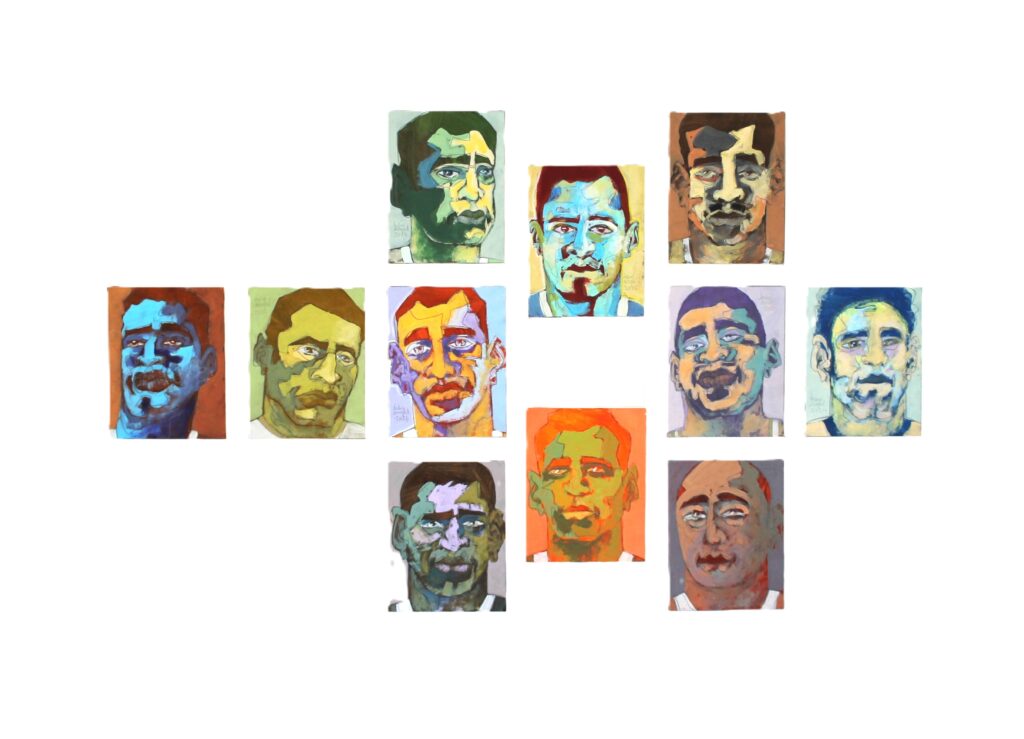
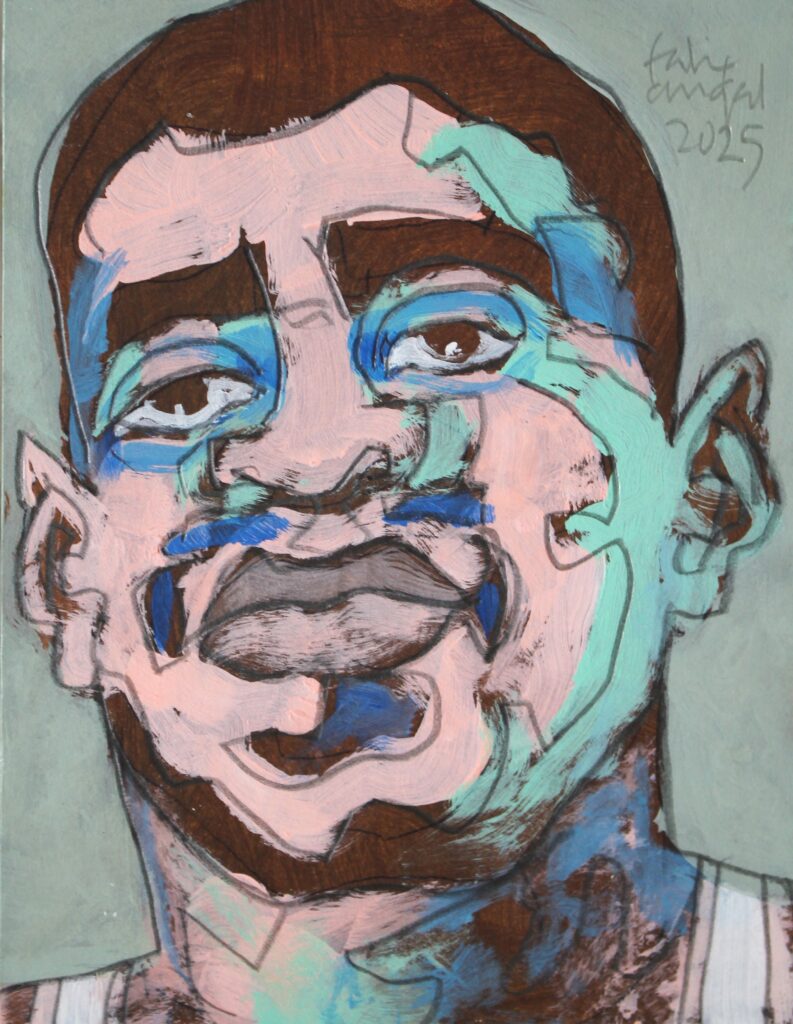
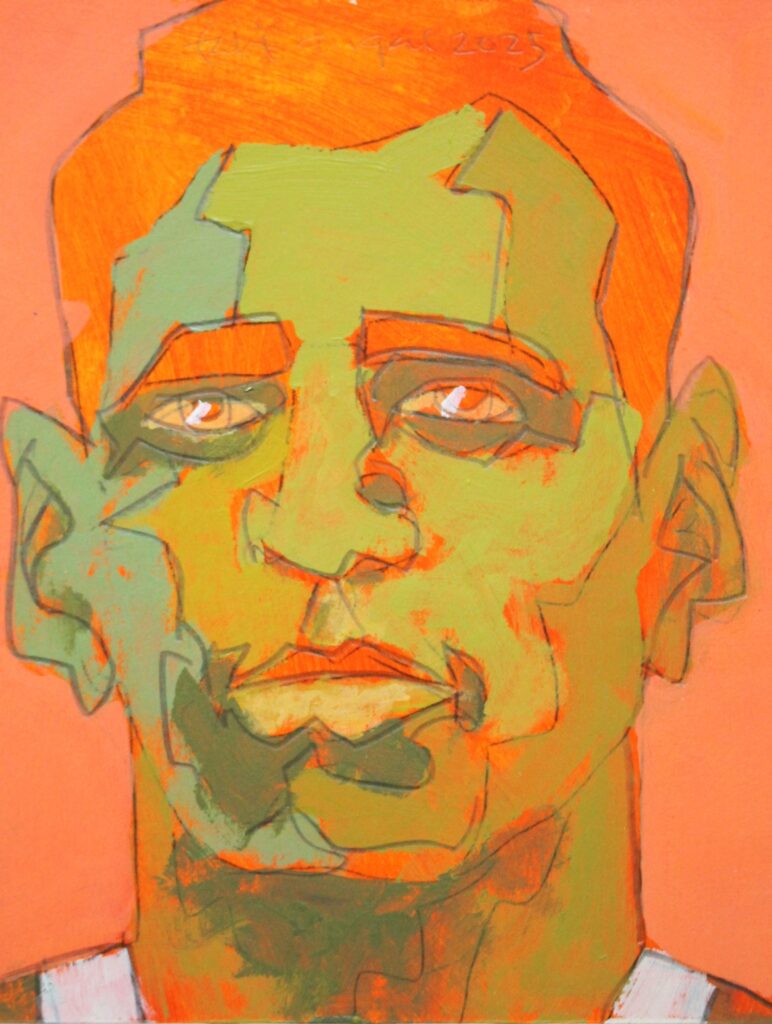
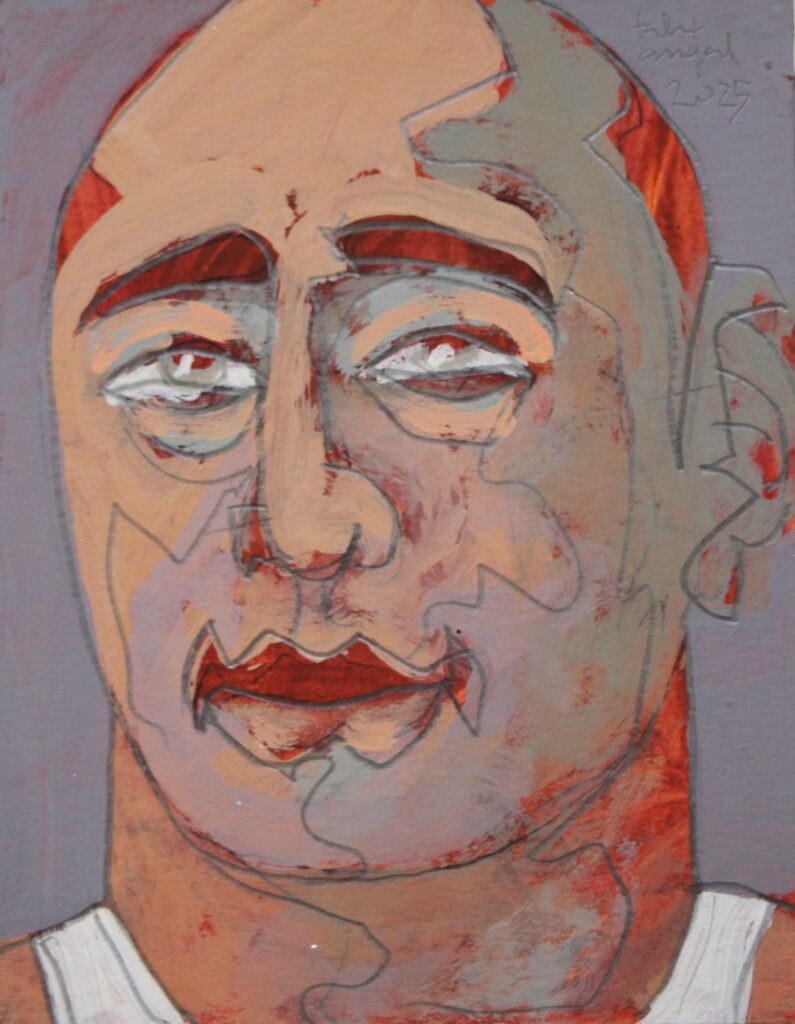
A few months ago, I received a first version of the soccer team that Félix Ángel painted with mixed technique, acrylics and pencil, on cardboard. That first version had the eleven members of a team that he titled: Neighborhood Migrant Soccer Team. There were eleven migrants in that team, among them it was possible to distinguish Latinos, browns or mestizos and Asians, perhaps also some mixture between that multiethnic, but with the expression that migration, as an indelible mark, leaves in each one. Apart from the mastery of stroke and color, well known in Felix’s work, the expression of those players was definitive, all, without a doubt, had in their eyes, in the position of their faces, in their mouths closed as if an inner force were moving them or, in the mouths themselves half-open as if the word were about to sprout from between their lips a force that has no limit, an indescribable force. It is the strength and decision that moves and sustains migrants.
A few months passed, I did not receive news again of Felix and the neighborhood migrant soccer team, nor did I think during those months about the future of the proposal of that international, world team, of migrant soccer players. I find out from the news and the newspapers about their situation in the countries of the first world, as they call it, as if those of the third world were a scum that must be annihilated, blamed, locked up without turning back. Then it happened that a few days ago I received in my mail versions six and seven of the migrant soccer team. I could say that they were the same as in the first version, of course Felix clarifies in his message that he has reworked the players, he has changed their color, he has put or removed their hair, he has changed their expression or the angle, but what he has not done is change the decision with which they look and the barely hinted sharpness of the occasional smile.
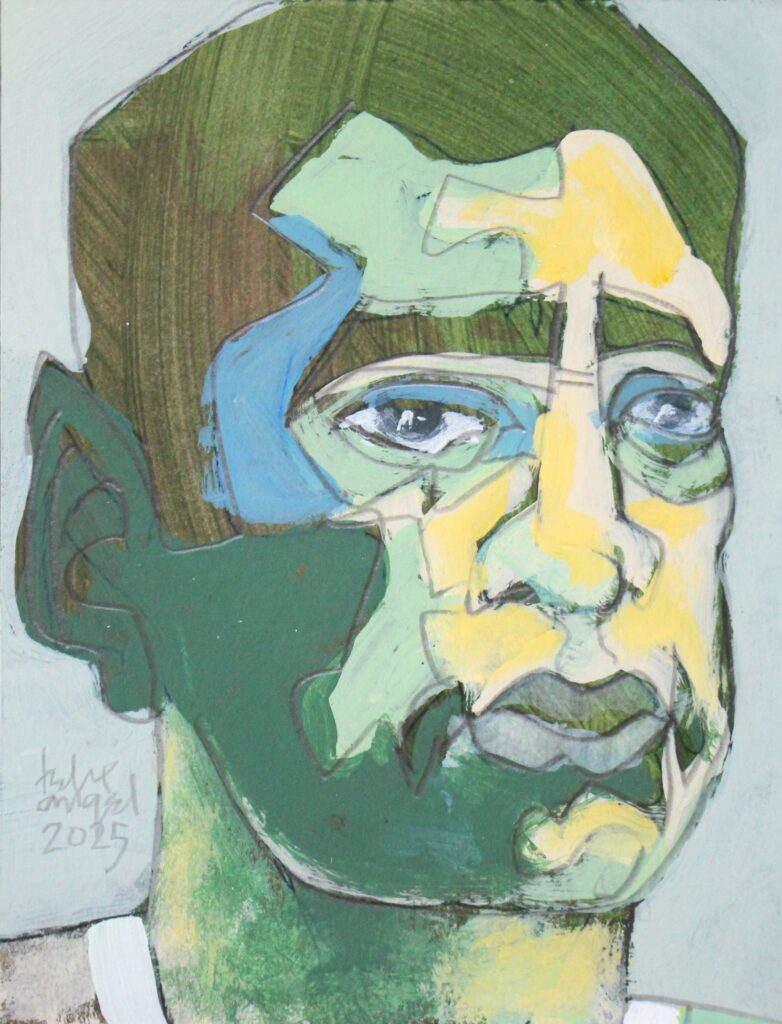
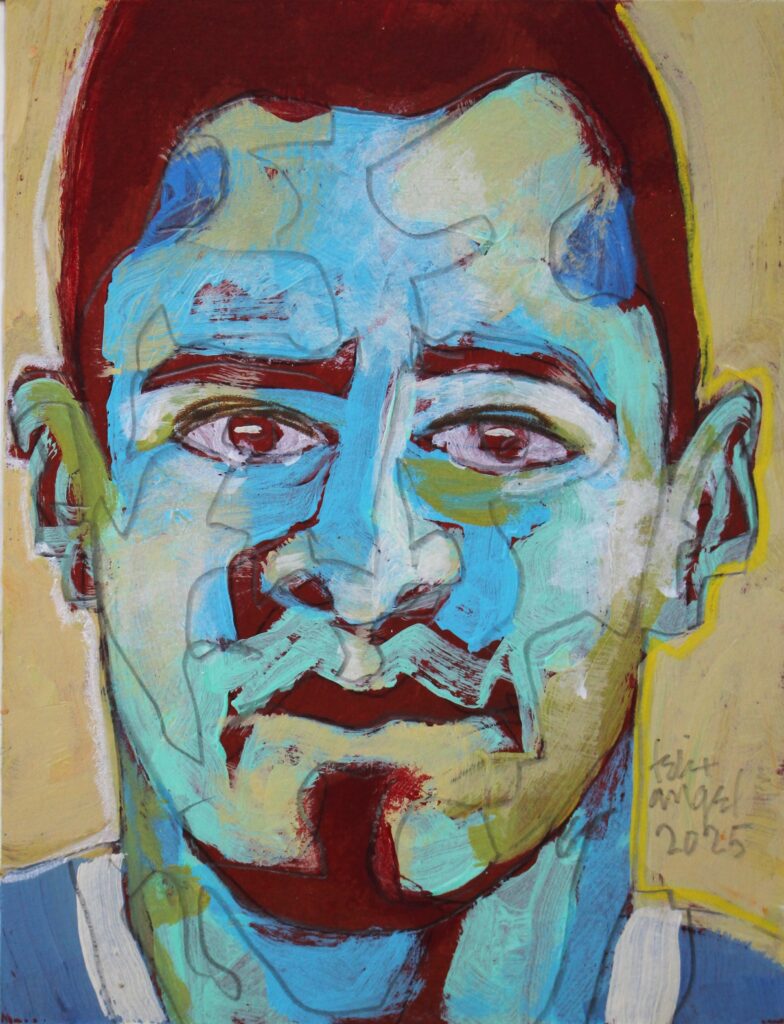
Then it occurred to me that it was not an evolution of the players of the first version but of the members of other teams in the neighborhood. If what I received were versions six and seven, it occurred to me to imagine that with the previous versions we would already have six or seven teams in a championship like the ones we did where the defenders were also strikers, and anyone could be the goalkeeper because everyone was in the possibility of defending the soccer goal. I remembered those games where no one got tired because they had to play and the times went beyond the regulation forty-five minutes.
I remembered that for us those games were a reunion with everything, with winning, losing, scoring the goal or preventing an opponent from scoring one in our goal. I remembered that in those games we were playing the adventure of being able to play them. And then I thought that the migrant soccer team was beyond that desire of ours, that they risked everything, every day and they play in all the positions, from the first hour to the last and whether they win or lose the next day they go out to the streets of their neighborhoods to play with regulation ball or rag ball but they go out with the idea of playing, to continue playing and at the end of the day to win, because that’s what it’s all about, to win but not only for them but because in the places where they came from or right there, on the second or third floor of the building around the corner there are close ones who see them go out to their daily game and wait for them to return with the game won.